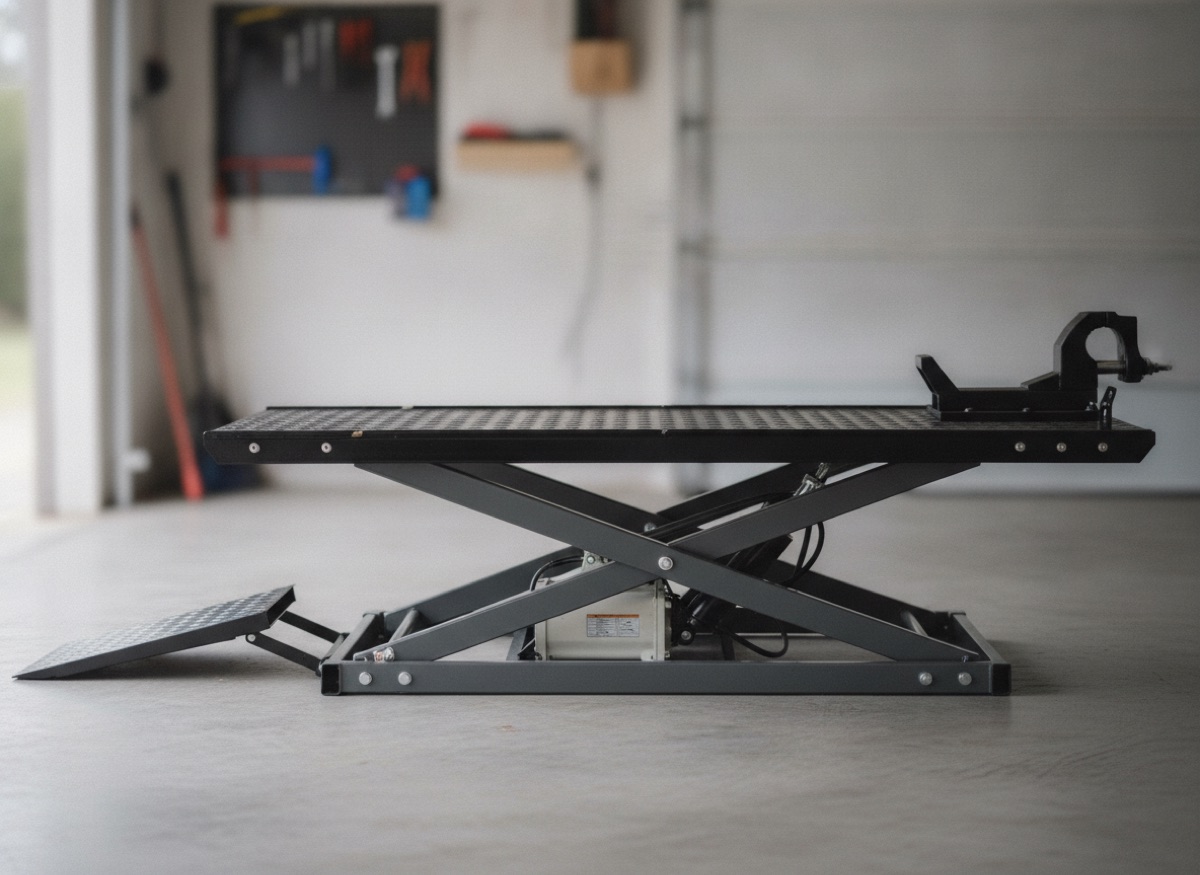
Illustration of a typical motorcycle lift — not a photograph of the Forward FML-1000 1,000-lb Bike Lift.
Forward FML-1000 Bike Lift Review: Simple and Effective for Home Mechanics
The Forward FML-1000 is the one mid-range table in this category built to move: a 1,000 lb table on locking swivel casters with a 45 by 20 inch deck, a 7 to 32 inch range and a lock bar plus check valve for around $399. This review covers when casters are worth it, what the 1,000 lb rating really allows, and how it stacks up against the Atlas AML-1000 and Challenger CML-1000.
Sold through equipment dealers — not currently listed on Amazon
See Top-Rated Motorcycle LiftsAffiliate Disclosure: Car Lift For Garage is a participant in the Amazon Services LLC Associates Program, an affiliate advertising program designed to provide a means for sites to earn advertising fees by advertising and linking to Amazon.com. We may earn a commission from qualifying purchases made through links on this page, at no additional cost to you.
How this review was researched
This is a research-based review built from the manufacturer's specifications and manuals, ALI certification records and the pricing and owner feedback available for this class of lift. We have not installed or operated this unit ourselves, and we do not publish a star rating without at least 10 verified owner ratings. How we evaluate lifts.
Pros
- Mobile design with locking casters allows easy repositioning around the garage
- Clean hydraulic operation with smooth lift and controlled lowering
- 1,000 lbs capacity handles sport bikes and middleweight motorcycles confidently
- Well-designed loading approach with low minimum height of 7 inches
- Assembly is straightforward and can be completed by one person in 60 minutes
- Good table surface dimensions with rubber matting for tire protection
Cons
- 1,000 lb capacity limits use with heavy touring bikes above 700 lbs
- Caster quality is adequate but not exceptional for long-term heavy rolling use
- Hydraulic foot pump requires 25-plus strokes for heavier motorcycles
- Brand recognition is lower than established lift manufacturers
What a mobile table solves
Most motorcycle tables are built once and never move. At 150 to 250 lb without casters, they claim 10 to 12 square feet of floor permanently, which is fine in a dedicated shop and a problem in a two-car garage that also holds two cars. The Forward FML-1000 is the answer to that problem: a full-size table on four locking swivel casters. Roll it out, lock the casters, load the bike, work, roll it back.
The published specs: a 1,000 lb capacity, a 45 by 20 inch steel deck with rubber matting, a hydraulic foot pump, a 7 to 32 inch height range, a safety lock bar and hydraulic check valve, 140 lb assembled weight and a one-year limited warranty. Price is around $399.
Forward is a smaller name than Atlas, Dannmar or Triumph, and that shows in the warranty and in the parts network rather than in the spec sheet. What the FML-1000 has that none of those brands offer at this price is mobility, and for the rider it is designed for that is the whole decision.
Capacity: 1,000 lb and the 650 lb rule
A 1,000 lb rating is a centered static figure. Keeping the bike under about two-thirds of it, roughly 650 lb, leaves room for the side loads that come with real work. That takes in every sport bike and naked bike, dual sports, adventure bikes like the BMW R 1250 GS at about 549 lb, and middleweight cruisers like the Sportster Iron 883 at about 564 lb.
It leaves out the big cruisers. A Harley Street Bob at about 650 lb is at the line; a Road King at about 800 lb is past it and belongs on the Dannmar DML-1200 or a 1,500 lb table. Casters raise the stakes here: a table on wheels has a slightly higher center of gravity and depends on four caster locks rather than four feet on concrete, so the margin matters more than on a fixed table.
The 45 by 20 inch deck matches the capacity. It is 2 inches narrower than the Atlas AML-1000 and 1 inch shorter, which is fine for bikes with a wheelbase under about 58 inches. A cruiser with floorboards sits with its boards near the edges. The rubber matting is a real inclusion; most tables in this price range ship with a bare textured deck.
Available on Amazon in this category:

* Affiliate link - we may earn a commission
Casters, floor condition and moving a loaded table
The casters are locking swivel units, which means each one has a brake that stops both rolling and swiveling. All four should be locked before the bike rolls on, and checked again before the first pump. On smooth concrete one person can push the empty 140 lb table across a garage; on a broom-finished slab it takes more effort, and on a cracked or sloped floor it should not be moved at all.
Moving the table with a bike on it is the question every buyer asks. The design allows rolling a loaded table at its lowest height across smooth, level concrete for short distances, with the bike strapped down. It does not allow rolling a raised table, rolling over a threshold or a floor drain, or rolling anything near the 1,000 lb rating. Treat the casters as a way to reposition a light bike by a few feet, not as a way to wheel a cruiser out to the driveway.
Assembly is the easiest of the mid-range tables. At 140 lb with casters, one person can build it in about an hour with basic hand tools, and there is no need to decide where the table lives before starting.
Deck, the 7 inch entry and the lock hardware
The 7 inch minimum height is 1 inch lower than the Atlas, Dannmar and Titan tables and the same as the Triumph NML-1500. That inch matters more than it sounds for roll-on loading: a low cruiser with a 5 inch ground clearance rolls onto a 7 inch deck over a short ramp without the frame touching. The 32 inch maximum is the lowest in this price range, 2 inches under the Atlas and 3 under the Dannmar. For a rider around six feet working on a low bike, that is bench height rather than chest height; most riders will not notice, taller ones might.
The safety hardware is a lock bar and a hydraulic check valve. The lock bar engages stops along the rise and carries the load once the release is opened; the check valve holds cylinder pressure if a seal or hose fails. That is the same pairing as on the Atlas AML-1000 and one lock short of the Dannmar DML-1200.
Forward does not list ALI or ETL certification, and no motorcycle table in this class has ALI certification. The one-year warranty is the shortest in the mid-range group; Atlas, Dannmar and Challenger all give two years.
Forward FML-1000 vs Atlas AML-1000 and Challenger CML-1000
The Atlas AML-1000 at around $449 is the closest fixed alternative: 1,000 lb, a 46 by 22 inch deck, 8 to 34 inches, a positive-lock bar, industrial powder coat, 155 lb, two-year warranty. For $50 more the Atlas has a wider deck, 2 inches more rise, heavier steel and double the warranty, and no casters. If the table can stay in one place, the Atlas is the better lift.
The Challenger CML-1000 at around $449 is the other fixed 1,000 lb option: a 47 by 22 inch deck, 8 to 33 inches, a lock bar and check valve, 155 lb, two-year warranty. It and the Atlas are close enough that brand preference decides; both beat the Forward on deck size and warranty, and both lose to it on mobility.
The Black Widow 1000 at around $169 is the other movable option, and it is a different product: an 85 lb jack with a 40 by 16 inch platform that one person carries rather than rolls. It is for riders who need the lift to disappear; the Forward is for riders who need it to move.
Buy it for the casters, or not at all
Buy the FML-1000 if the garage is shared with cars and the table has to roll out of the way between jobs, the bike is under about 650 lb, and a 7 inch entry height matters for a low bike. It is the only full-size table in this category with locking casters, and for that buyer nothing else at the price does the same job.
Skip it if the table will live in one spot. The Atlas AML-1000 and Challenger CML-1000 at $50 more have bigger decks, heavier steel and two-year warranties, and the Titan 1500 at $100 less has 500 lb more rating. Skip it too for heavy cruisers and touring bikes; those bikes need a 1,200 or 1,500 lb table with no wheels under it.
Our recommendation: if the answer to the question of where the table will live is a shrug, buy the Forward. If the answer is a spot on the floor, buy something else.
Final Verdict
The FML-1000 is the table to buy if the lift cannot have a permanent spot. Locking swivel casters let one person roll the empty table out for a job and back against a wall afterward, and the 1,000 lb rating, 7 inch entry height and lock bar plus check valve cover sport bikes and middleweights properly. Skip it if the table will never move; the Atlas AML-1000 at $50 more has a bigger deck, heavier steel and a two-year warranty. And skip it for any bike over about 650 lb regardless.
The Forward FML-1000 1,000-lb Bike Lift isn't currently sold on Amazon. Here's our top-rated motorcycle lifts pick that is:
Our top-rated motorcycle lifts currently available on Amazon.
Price incl. tax, excl. shipping.
* Affiliate link - we may earn a commission
Specifications
- Lift Capacity
- 1,000 lbs
- Lift Type
- Mobile Hydraulic Table
- Pump Type
- Hydraulic Foot Pump
- Table Dimensions
- 45" x 20"
- Height Range
- 7" to 32"
- Weight
- 140 lbs
- Material
- Steel Construction
- Mobility
- Locking Swivel Casters
- Safety Features
- Safety Lock Bar, Hydraulic Check Valve
- Warranty
- 1 Year Limited
Wheels off? Check the tires
A lift puts every tire at eye level, so it is an easy time to check pressure. Fanttik makes cordless tire inflators.
See Fanttik tire inflatorsTags
Related Reviews
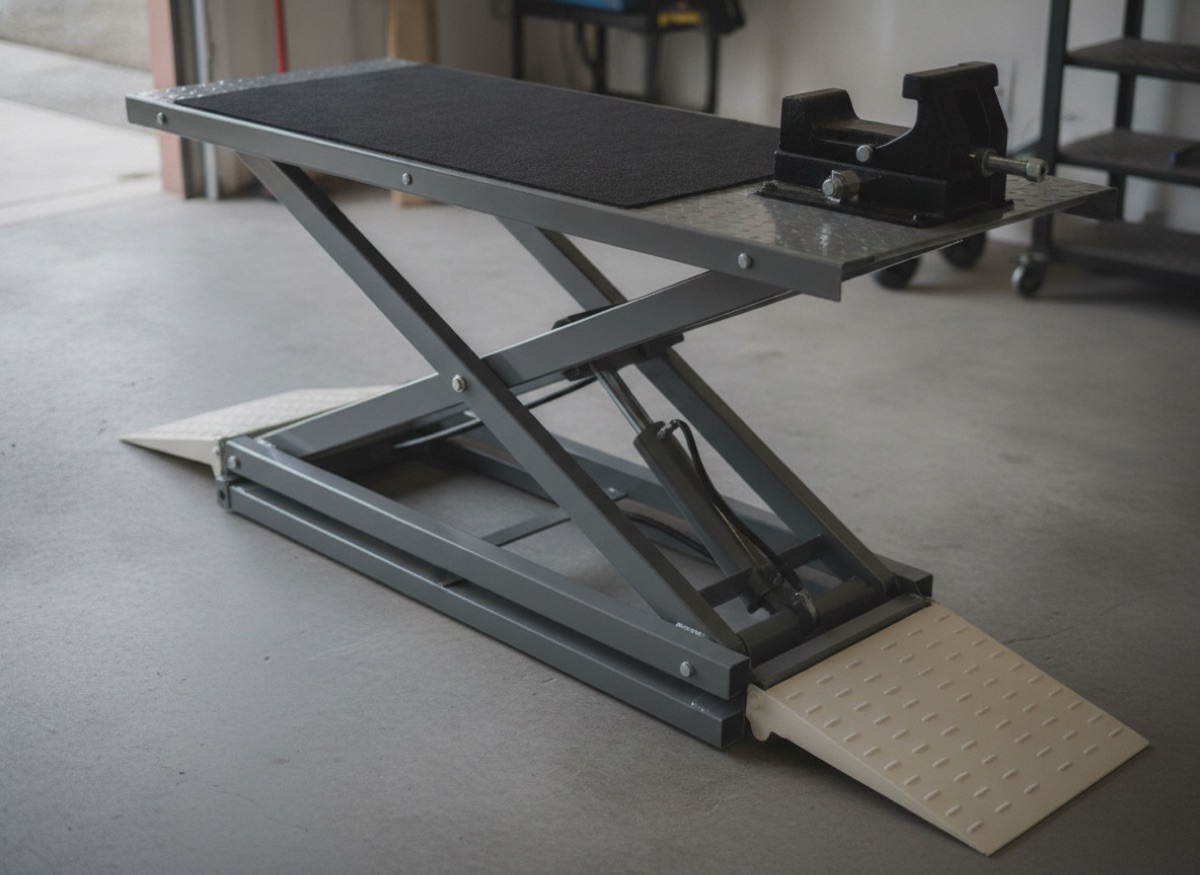
Atlas AML-1000 Bike Lift Table Review: Reliable Mid-Range Performer
Est. $449 MSRP
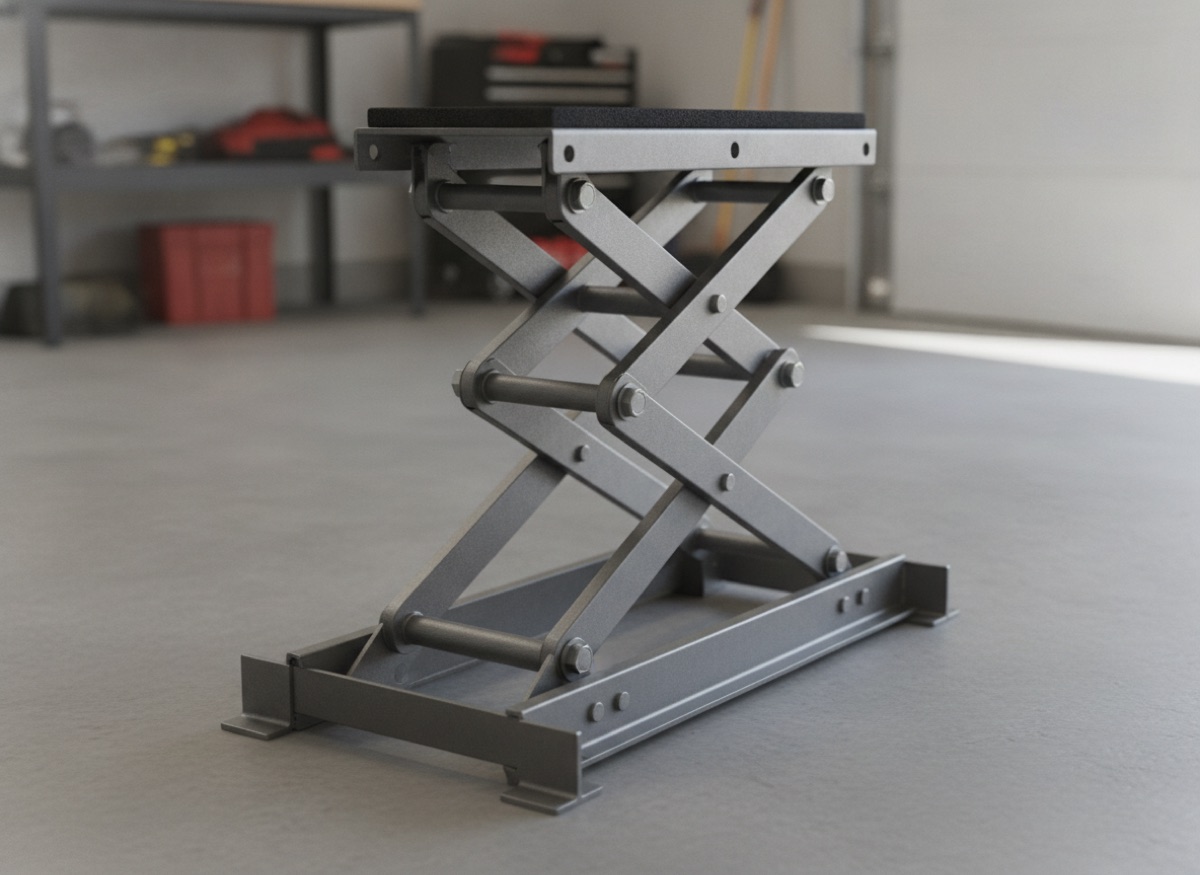
Black Widow Steel Motorcycle Jack 1000 lbs Review: Compact and Affordable
Est. $169 MSRP
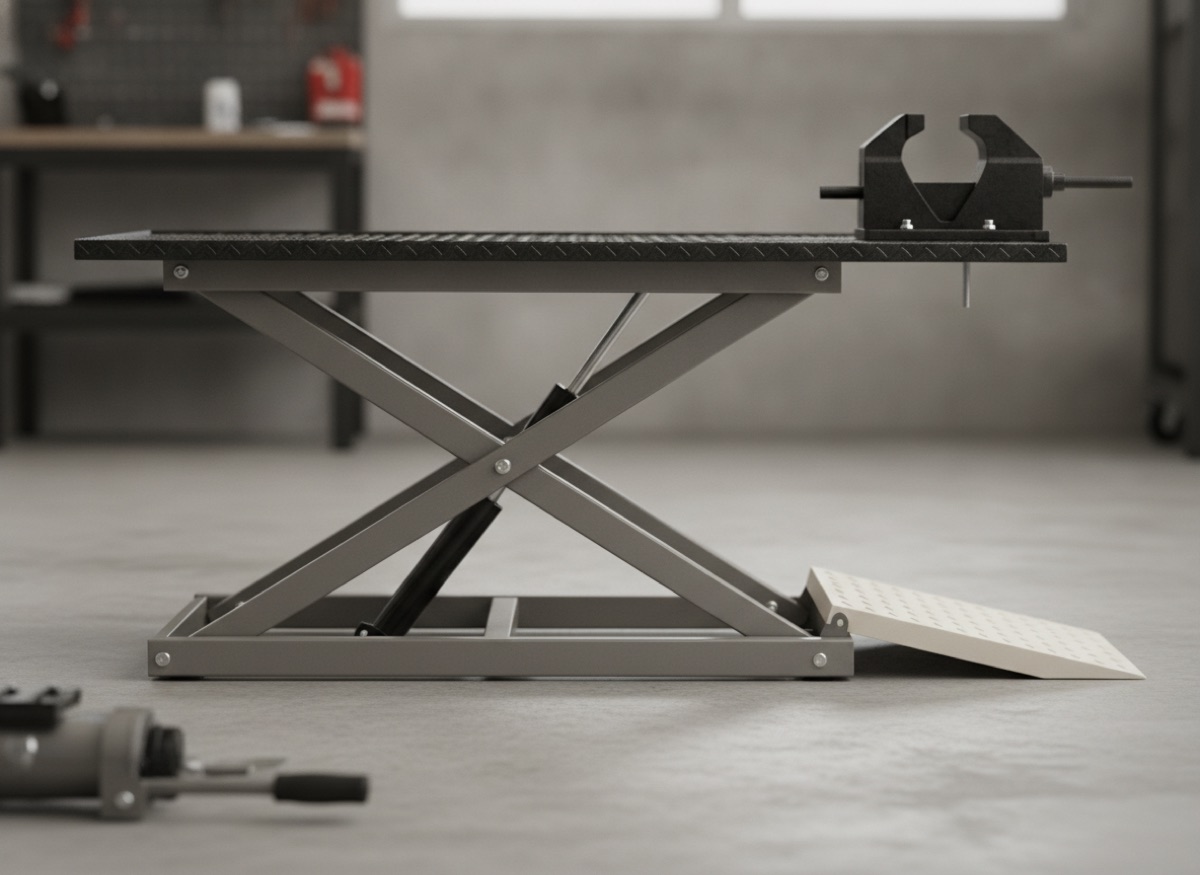
Challenger CML-1000 Value Motorcycle Lift Review: Premium Brand at Entry Pricing
Est. $449 MSRP
Need Help Choosing?
Use our comparison tool to see how the Forward FML-1000 1,000-lb Bike Lift stacks up against other lifts, or read our buying guide for expert recommendations.