
Atlas 9KOHX Review: Solid Mid-Range Overhead 2-Post Lift
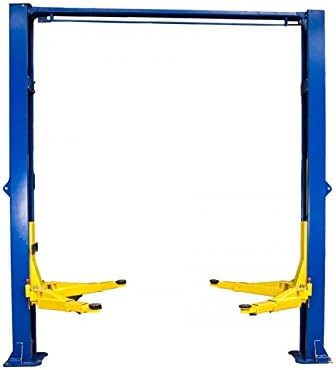
The Atlas 9KOHX is a 9,000 lb clear-floor overhead 2-post with extra-wide columns, symmetric arms and a minimum ceiling of 11 ft 2 in, priced around $2,399. It sits between the APlusLift HW-9KOH and the Triumph NTO-9A on price. This review covers what the wide columns buy, the 1-year warranty, and whether it is worth $200 more than the APlusLift.
Affiliate Disclosure: Car Lift For Garage is a participant in the Amazon Services LLC Associates Program, an affiliate advertising program designed to provide a means for sites to earn advertising fees by advertising and linking to Amazon.com. We may earn a commission from qualifying purchases made through links on this page, at no additional cost to you.
Our Rating
This score weighs the published specifications, the certification status and 23 Amazon owner ratings (averaging 4.5/5 at our last check). We have not installed or operated this unit ourselves. How we evaluate lifts.
Pros
- Extra-wide columns provide stability and professional appearance
- Solid mid-range pricing with good build quality
- Symmetric arms work well for trucks and older vehicles
- Relatively quiet operation compared to budget alternatives
- Good technical documentation and support
- Manageable installation for experienced DIYers
Cons
- Symmetric arms only - no asymmetric option
- Standard warranty shorter than some competitors
- Paint quality good but not exceptional
- Lacks some premium features like dual-synchro equalization
Where the 9KOHX sits in the Atlas line
Atlas is the equipment brand of Greg Smith Equipment, an Indianapolis distributor that has imported and supported lifts since the 1980s, and the 9KOHX is its entry 9,000 lb clear-floor overhead 2-post. The X in the name refers to the extra-wide columns, which are the visible difference between this lift and the narrower-column imports at the same price. It is a symmetric lift: the vehicle is centered between the columns, the arms are equal length, and door access with the car in the air is limited.
At about $2,399 it sits roughly $200 above the APlusLift HW-9KOH and $300 below the Triumph NTO-9A, and on paper it is very close to both. The practical differences are the column width, the ceiling requirement, the warranty, and the dealer behind it. Owner reviews on Amazon for Atlas lifts consistently mention the brand's parts availability, which for a lift that may be in a garage for twenty years is a real consideration rather than a marketing line.
Capacity, ceiling and bay dimensions
The rating is 9,000 lb, enough for any sedan, SUV or half-ton pickup and for most three-quarter-ton trucks unloaded. The minimum ceiling is 11 ft 2 in, which is 4 in less than the HW-9KOH's 11 ft 6 in and 2 in less than the NTO-9A's 11 ft 4 in. Those inches sound trivial until the tape measure comes out in an older garage with a 11 ft 3 in ceiling, at which point the 9KOHX is the only one of the three that fits.
Rise is in line with the class, high enough to stand under a car for a mechanic of average height. The extra-wide columns add to the overall footprint, so measure the bay width with the column bases and the power unit in mind, and leave room outside each column for the arms to swing clear when the bay is empty. Atlas publishes a full dimension drawing on the Greg Smith site; use it rather than a competitor's numbers, because the wide columns change the outside-to-outside width.
* Affiliate link - we may earn a commission
Installation and power
The 9KOHX runs on 220V single phase and needs the standard 4 in minimum concrete slab for its anchors. The wide columns are heavier than narrow ones, so standing them up is a job for two people plus an engine hoist or a third helper. Atlas ships anchor bolts and hardware, and Greg Smith's installation documentation is more complete than the typical Amazon import, which owner reviews note as a pleasant surprise for a lift at this price.
Equalization is a single-cable system, which is standard for the class and works fine when it is adjusted correctly and checked periodically. The overhead beam carries the cross cables and the hydraulic line and holds the shut-off bar that stops the lift if a vehicle roof touches it. Plan on a full weekend with a helper. Greg Smith sells the lift through dealers and its own site as well as Amazon, and a dealer install is available for buyers who want it.
Safety features and certification
The 9KOHX has automatic mechanical safety locks in each column that engage as the carriage rises, plus arm locks that engage under load. It is CE certified, which is a manufacturer declaration rather than the third-party ALI/ETL listing that BendPak, Challenger and Rotary carry on their lifts. For home use that is a normal trade at this price; for a shop that carries commercial insurance, it is a reason to spend more on an ALI-listed lift.
The extra-wide columns are a real safety contribution rather than a cosmetic one: a wider column section resists twisting when the load is off center, which happens whenever a vehicle is not perfectly placed on a symmetric lift. It does not have the dual-synchro equalization BendPak uses, and the cons list is honest about that. In practice, careful arm placement on the manufacturer's lift points and a slab that meets spec matter more than any of these features.
Compared with the APlusLift HW-9KOH, Triumph NTO-9A and BendPak HD-9
The HW-9KOH, about $2,199, is the value benchmark: 9,000 lb, symmetric, overhead, CE certified, 3-year parts-and-labor warranty, and by far the most owner reviews on Amazon of any 2-post. The 9KOHX is stiffer and fits 4 in less ceiling; the APlusLift has the longer warranty and the larger body of owner experience. The Triumph NTO-9A at about $2,695 adds dual-point safety locks and automatic arm restraints but keeps a 1-year warranty and needs 11 ft 4 in.
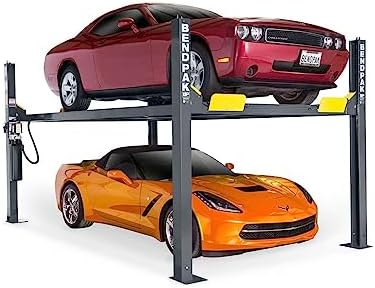
The BendPak HD-9 is a different animal, a 9,000 lb 4-post that drives on rather than lifts by the frame. It is easier to install, needs no overhead beam, and is the better choice for storage and oil changes; the 2-post is better for wheels, brakes and suspension. Between the three 2-posts, we think the APlusLift is the better value and the Atlas is the better fit for a tight ceiling. The Triumph only wins if its arm restraints are worth $300 to the buyer.
Who should buy it (and who shouldn't)
Buy the 9KOHX if the ceiling is under 11 ft 6 in but at least 11 ft 2 in, which rules out the APlusLift and makes this the cheapest clear-floor overhead lift that fits. Buy it if a dealer network and a distributor that has sold lifts for forty years matter more than a longer warranty. Buy it if the wide columns and the shop-equipment look are worth $200.
Skip it if the ceiling is 11 ft 6 in or taller and the budget is tight, because the HW-9KOH does the same job with a 3-year warranty for less. Skip it if door clearance matters, since there is no asymmetric version; the APlusLift HW-10KBP with combo arms or the BendPak XPR-10AS are the lifts for that. And skip it for commercial work where an ALI listing is required. It is a good lift with a short warranty, and that is the honest summary.
Final Verdict
Overall Rating
The 9KOHX is a good 9,000 lb symmetric overhead lift from a brand, Atlas via Greg Smith Equipment, that has sold 2-posts in the United States for decades, and its 11 ft 2 in ceiling requirement is a few inches more forgiving than the APlusLift HW-9KOH. The extra-wide columns are stiffer and look like shop equipment. Against that, it costs about $200 more than the HW-9KOH, carries a 1-year parts warranty instead of 3 years parts and labor, and has no asymmetric option and no ALI listing. Buy it if the ceiling is right at 11 ft 2 in or if the Greg Smith dealer network matters to you. Otherwise the HW-9KOH does the same job with a longer warranty for less money, and that is the one we would order.
- Extra-wide columns provide stability and professional appearance
- Solid mid-range pricing with good build quality
- Symmetric arms work well for trucks and older vehicles
- Relatively quiet operation compared to budget alternatives
Price incl. tax, excl. shipping. Last updated September 5, 2026.
* Affiliate link - we may earn a commission
Specifications
- Capacity
- 9,000 lbs
- Design Type
- Overhead
- Arm Configuration
- Symmetric
- Power Requirements
- 220V single phase
- Min Ceiling Height
- 11 feet 2 inches
- Column Design
- Extra-wide
- Certification
- CE certified
- Warranty
- 1 year parts
- Equalization
- Single cable synchronization
- Special Features
- Extra-wide columns, automatic safety locks
* Affiliate link - we may earn a commission
Wheels off? Check the tires
A lift puts every tire at eye level, so it is an easy time to check pressure. Fanttik makes cordless tire inflators.
See Fanttik tire inflatorsTags
Related Reviews

Need Help Choosing?
Use our comparison tool to see how the Atlas 9KOHX stacks up against other lifts, or read our buying guide for expert recommendations.