4-Post vs 2-Post Car Lifts: Which Is Right for Your Garage?
Choosing between a 4-post and 2-post car lift is the most common decision home garage owners face. This head-to-head comparison covers everything from installation requirements to long-term value so you can pick the right lift type for your needs.
Affiliate Disclosure: Car Lift For Garage is a participant in the Amazon Services LLC Associates Program, an affiliate advertising program designed to provide a means for sites to earn advertising fees by advertising and linking to Amazon.com. We may earn a commission from qualifying purchases made through links on this page, at no additional cost to you.

Quick Answer: 4-Post or 2-Post?
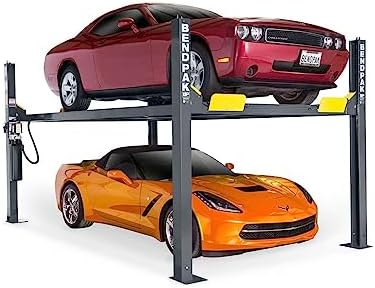
If your primary goal is vehicle storage and easy drive-on convenience, choose a 4-post lift. If you need full undercar access for mechanical work like suspension, brakes, and exhaust, choose a 2-post lift. Most home garage owners who want to double their parking capacity and do occasional maintenance are best served by a 4-post lift like the BendPak HD-9. Serious DIY mechanics who wrench regularly should invest in a 2-post lift like the BendPak XPR-10AS.
Here is the complete comparison to help you decide.
Side-by-Side Comparison Table
| Feature | 4-Post Lift | 2-Post Lift |
|---|---|---|
| Price Range | $1,500 – $6,000 | $2,000 – $8,000 |
| Installation | Often freestanding — no floor anchors | Requires 4"+ concrete anchoring |
| Ceiling Height | 8–10 ft minimum | 11.5 ft minimum |
| Capacity | 8,000–14,000 lbs | 9,000–12,000 lbs |
| Undercar Access | Limited (needs rolling jacks) | Full, unrestricted |
| Vehicle Storage | Excellent — park car underneath | Not suitable for storage |
| Ease of Use | Drive on/off in seconds | Requires arm positioning |
| Floor Space | ~12 × 22 ft | ~12 × 15 ft |
| Electrical | 110V or 220V | Usually 220V |
| Best For | Storage, light maintenance | Full mechanical work |
When to Choose a 4-Post Car Lift
A 4-post car lift is the better choice when:
1. Vehicle storage is your primary goal. 4-post lifts are designed around drive-on convenience. You can park one car on the lift and another underneath, effectively doubling your garage capacity. This makes them the top pick for car collectors, households with more vehicles than garage bays, and anyone storing seasonal vehicles.
2. You have a standard-height garage. Most 4-post lifts work in garages with 8 to 10-foot ceilings, which covers the majority of residential garages in the United States. 2-post lifts typically need 11.5 feet or more — a height many homeowners simply do not have.
3. You want the simplest installation. Many 4-post lifts are freestanding and do not require floor anchoring. You can set one up on a flat, level garage floor in a few hours with basic tools. This saves $500 to $1,000 in installation costs compared to a 2-post lift.
4. Multiple people will use the lift. The drive-on design of a 4-post lift means anyone can operate it without training. There is no arm positioning or lift-point identification required — just drive on, engage the locks, and press the button.
Our top 4-post pick: The BendPak HD-9 offers 9,000 lb capacity, ALI/ETL certification, and proven reliability for $2,899. For budget buyers, the Triumph NSS-8 at $1,799 delivers excellent value.
When to Choose a 2-Post Car Lift
A 2-post car lift is the better choice when:
1. You do serious mechanical work. 2-post lifts provide completely unrestricted access to the underside of the vehicle — wheels, suspension, brakes, exhaust, drivetrain, and frame are all fully exposed. If you regularly do brake jobs, suspension work, or exhaust modifications, a 2-post lift will save you significant time and frustration compared to working on a 4-post.
2. You have adequate ceiling height. If your garage ceiling is 11.5 feet or higher, you can accommodate a standard 2-post lift. This gives you full overhead lift height to walk comfortably underneath the vehicle. Low-profile models can work in 10-foot ceilings but sacrifice some maximum rise.
3. You want a smaller floor footprint. A 2-post lift takes up roughly 12 × 15 feet including walk-around space, compared to 12 × 22 feet for a 4-post. If floor space is limited, a 2-post lift leaves more room for workbenches, toolboxes, and other equipment.
4. You plan to use rolling jacks or jack stands frequently. With a 2-post lift, all four wheels are off the ground by default, so you do not need additional equipment for wheel-off work. On a 4-post lift, the wheels sit on the runways and you need optional rolling jacks ($400–$600 extra) for brake and suspension access.
Our top 2-post pick: The BendPak XPR-10AS offers 10,000 lb capacity, asymmetric arm design for door clearance, and ALI certification for around $4,035.
Total Cost Comparison: 4-Post vs 2-Post
The true cost of a car lift goes beyond the sticker price. Here is a realistic cost comparison including installation.
| Cost Component | 4-Post Lift | 2-Post Lift |
|---|---|---|
| Lift unit (mid-range) | $2,500 – $3,500 | $3,000 – $4,500 |
| Electrical work | $0 – $300 (110V models) | $300 – $800 (220V required) |
| Concrete work | Usually none | $0 – $500 (if slab < 4") |
| Professional installation | $200 – $500 | $500 – $1,000 |
| Permits | $0 – $200 | $50 – $200 |
| Accessories (jacks, drip trays) | $400 – $800 | $100 – $300 |
| Total Installed | $3,100 – $5,300 | $3,950 – $7,300 |
A 4-post lift typically costs $800 to $2,000 less than a 2-post lift when you factor in installation and accessories. The main reason is that 4-post lifts often skip the concrete anchoring and 220V electrical work that 2-post lifts require.
However, if you plan to do brake and suspension work on a 4-post lift, budget an extra $400 to $600 for rolling jack trays. These are essential for lifting wheels off the runways.
Our Verdict
For most home garage owners, a 4-post car lift is the better choice. Here is why: the majority of people buying a home garage lift want to double their parking capacity first and do maintenance second. The 4-post design delivers exactly that — easy drive-on storage with the option to add rolling jacks for occasional mechanical work.
Choose a 2-post lift only if you are a dedicated mechanic who needs full undercar access multiple times per month and has a garage with 11.5+ foot ceilings.
Our recommendations: - Best 4-post for home garage: BendPak HD-9 ($2,899) — 9,000 lb, ALI certified - Best budget 4-post: Triumph NSS-8 ($1,799) — 8,000 lb, great value - Best 2-post for home garage: BendPak XPR-10AS ($4,035) — 10,000 lb, asymmetric design - Best budget alternative: QuickJack 5000TL portable ($1,499) — no install needed
Our Top Recommendations
BendPak HD-9 4-Post Lift
Our #1 pick for home garage 4-post lifts. 9,000 lb capacity with ALI/ETL certification and excellent build quality.
BendPak XPR-10AS 2-Post Lift
The gold standard in 2-post lifts. 10,000 lb asymmetric design with full ALI certification and dual-point safety locks.
* Affiliate link - we may earn a commission
Frequently Asked Questions
Is a 4-post or 2-post car lift better for a home garage?▼
Can you do brake work on a 4-post car lift?▼
How much does a 4-post car lift cost vs a 2-post?▼
Do 4-post car lifts need to be bolted to the floor?▼
What ceiling height do I need for a car lift?▼
About the Author

James Wilson
- ASE Master Automobile Technician (A1–A9)
- Automotive Lift Institute (ALI) Lift Inspector Certified
- 20+ years in professional automotive service
ASE-Certified Master Technician and editorial lead at Car Lift For Garage. 20+ years servicing and installing automotive lifts across residential and light-commercial shops.
Related Expert Reviews

More Buying Guides
How to Choose the Right Car Lift for Your Garage
Choosing the right car lift is one of the biggest investments you can make for your home garage. This comprehensive guide walks you through every factor you need to consider, from ceiling height and floor thickness to weight capacity and electrical requirements.
12 min read · By James Wilson4-Post LiftsBest 4-Post Car Lift for Home Garage (2026): 9 Tested & Ranked
After testing nine four-post car lifts in home garage conditions, we ranked them by build quality, safety certifications, ease of installation, and value. Whether you need a lift for storage, maintenance, or both, this guide tells you exactly which model to buy.
14 min read · By James WilsonReady to Find Your Lift?
Browse our curated selection of top-rated car lifts or use our comparison tool to find the perfect match.