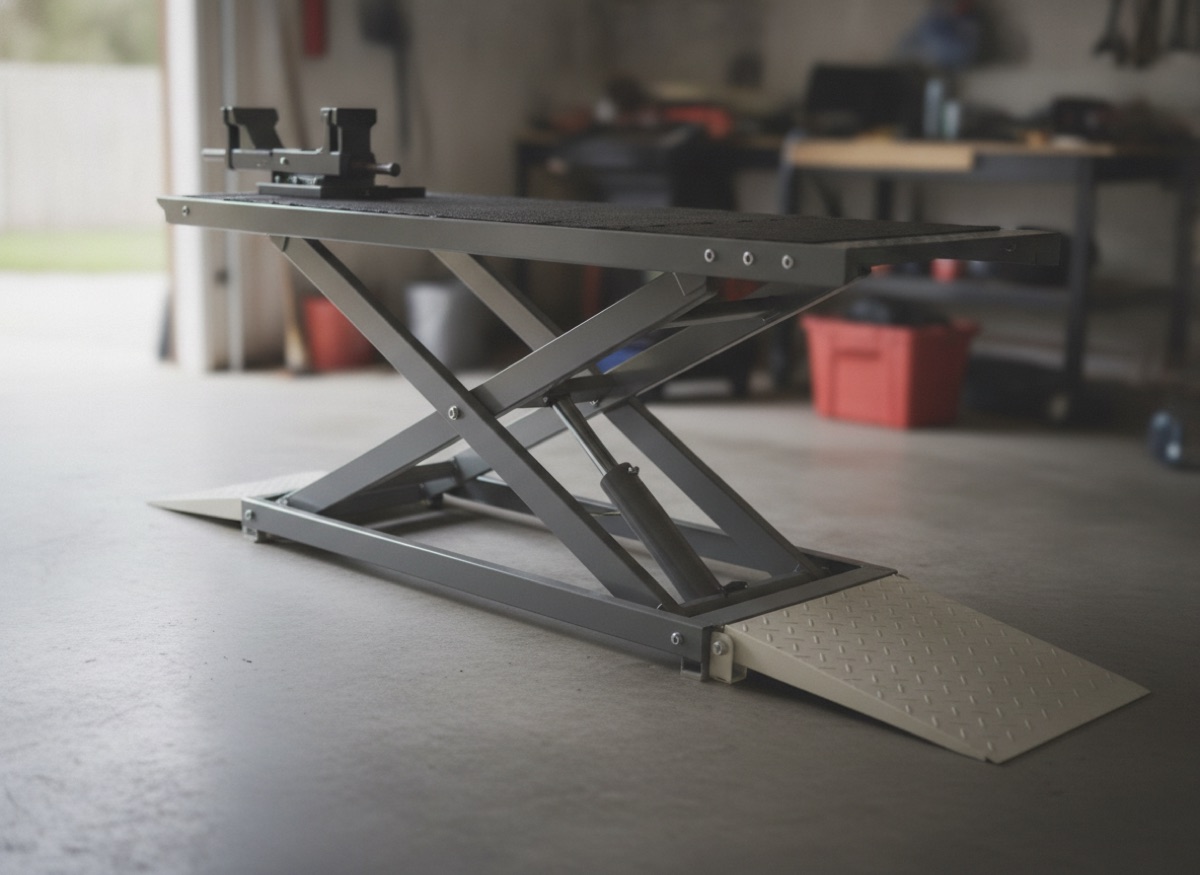
Illustration of a typical motorcycle lift — not a photograph of the VEVOR Motorcycle Lift 1100 LBS Hydraulic Table.
VEVOR Motorcycle Lift 1100 LBS Review: Best Budget Hydraulic Table
The VEVOR 1100 LBS Hydraulic Table is the cheapest way to get a real scissor lift table under a motorcycle. This review works through the published numbers, what a 44 by 18 inch deck can and cannot hold, and where the Titan 1500 and Black Widow 1000 make more sense.
Sold through equipment dealers — not currently listed on Amazon
See Top-Rated Motorcycle LiftsAffiliate Disclosure: Car Lift For Garage is a participant in the Amazon Services LLC Associates Program, an affiliate advertising program designed to provide a means for sites to earn advertising fees by advertising and linking to Amazon.com. We may earn a commission from qualifying purchases made through links on this page, at no additional cost to you.
How this review was researched
This is a research-based review built from the manufacturer's specifications and manuals, ALI certification records and the pricing and owner feedback available for this class of lift. We have not installed or operated this unit ourselves, and we do not publish a star rating without at least 10 verified owner ratings. How we evaluate lifts.
Pros
- 1,100 lbs capacity handles most motorcycles with a generous safety margin
- Hydraulic lift table provides smooth, controlled raising and lowering
- Adjustable height accommodates a wide range of working positions
- Built-in wheels make it easy to reposition around the garage
- Exceptional value at under $200 for a hydraulic motorcycle lift
- Straightforward assembly with clear instructions included
Cons
- Table surface area is narrower than premium lifts, limiting workspace for larger cruisers
- Hydraulic foot pump requires steady effort for heavier bikes over 800 lbs
- Paint finish is functional but prone to chipping under heavy use
- Wheel casters could be more robust for frequent rolling on rough garage floors
What $189 buys in a motorcycle lift
VEVOR sells tools on volume and price, and the 1100 LBS Hydraulic Table is the company's entry in the crowded budget lift-table segment. The spec sheet is short: a 1,100 lb capacity, a 44 by 18 inch steel deck, a hydraulic foot pump, a 9 to 33 inch height range, built-in wheels for moving the empty table, a mechanical locking mechanism and a one-year limited warranty. Assembled weight is 110 lb.
That is the whole story, and for a lot of riders it is enough. A scissor table at this price does the same basic job as a $600 table: it raises the bike to a height where the rider can work standing or on a stool instead of kneeling on concrete. What the price does not buy is a wider deck, a second lock, a heavy gauge frame or a loading ramp with a gentle angle.
We put the VEVOR at the top of the budget category for one reason: the 1,100 lb rating is 100 lb more than the Black Widow at nearly the same price, and the wheels make the table usable in a one-car garage where nothing gets a permanent spot. It is not a shop lift and VEVOR does not claim it is.
Capacity and the 18 inch deck
The 1,100 lb rating sounds generous next to the wet weight of most bikes. A Yamaha MT-07 is about 406 lb, a Sportster Iron 883 about 564 lb, a Triumph Bonneville T120 about 520 lb. Even a Harley Street Bob at roughly 650 lb leaves 450 lb of margin. The rating is not the limitation on this table.
The deck is. At 18 inches wide and 44 inches long, the platform is narrower than every other table in this category: the Titan 1500 and JEGS 80081 are 24 inches wide, the Black Widow 16. A sport bike or standard sits centered with room on both sides. A wide cruiser with floorboards and forward controls puts its footprint near the edges, and the rider has to be exact about where the tires land before pumping. Baggers and touring bikes do not belong on it at all: a Street Glide at about 800 lb is inside the rating but far outside the comfortable width, and its 64 inch wheelbase overhangs a 44 inch deck at both ends.
Our rule for this lift: bikes up to about 700 lb with a wheelbase under 60 inches. Beyond that, buy width as well as capacity.
Available on Amazon in this category:

* Affiliate link - we may earn a commission
Assembly, the foot pump and the wheels
At 110 lb the VEVOR is light enough for one person to unpack and bolt together with a socket set and two adjustable wrenches. VEVOR's instructions are diagram-heavy and short on text, which is typical of the brand, but there are few parts and the scissor assembly ships pre-welded. Plan on an hour.
The hydraulic foot pump is a standard single-stage unit with a release pedal or valve for lowering. Effort per stroke rises with load, and VEVOR does not publish a stroke count, so expect a heavier cruiser to take noticeably more pumping than a 400 lb standard. The cons list on this page reflects that: a table at this price is not a good fit for someone who lifts an 800 lb bike every weekend. Lowering is controlled by how far the release is opened, and the right habit is to crack it slowly and stay with the bike until it settles.
The wheels are for moving the empty table. They are small casters intended for smooth concrete, and rolling the lift with a bike on it is not something the design supports. Park the table, load the bike, then work.
Safety: one lock, and how to use it
The VEVOR lists a single locking mechanism. On tables in this class that is a ratchet-style lock bar that drops into notched positions as the scissor rises, so the table can rest on steel rather than on hydraulic pressure at set heights. It is not a continuous positive lock like the bar on the Atlas AML-1000 or the dual locks on the Dannmar DML-1200, and it is the main safety difference between a $189 table and a $450 one.
Used correctly it is adequate. Raise the table slightly above the notch, let the lock seat, then release hydraulic pressure so the load sits on the lock. Never work under a raised table that is held by the pump alone. VEVOR does not list an ALI or ETL certification for this product, and none should be assumed; ALI's certification program is written around automotive lifts, and almost no motorcycle table at any price carries it.
The other safety item is the floor. A scissor table needs a flat, level slab; with 110 lb of lift and 600 lb of bike, a sloped driveway apron changes the center of gravity enough to matter. Tie the bike down with straps to the deck anchor points before the first pump. That is standard practice on every table, not a VEVOR-specific caution.
VEVOR 1100 vs Black Widow 1000, Titan 1500 and JEGS 80081
The Black Widow Steel Motorcycle Jack, at around $169, is the closest competitor: 1,000 lb, a 40 by 16 inch deck, 7 to 30 inches of travel and 85 lb of lift. It is smaller and lighter, which matters if the lift has to slide under a workbench between uses. The VEVOR has 100 lb more rating, 4 inches more length, 2 inches more width and 3 inches more rise. For most riders the VEVOR's extra deck is worth $20.
The Titan 1500 lb Motorcycle ATV Lift at around $299 is the step up. It is rated 1,500 lb, the deck is 48 by 24 inches, the range is 8 to 34 inches, and it has a proper safety lock bar. The Titan weighs 165 lb and needs two people to assemble, but it handles cruisers and light touring bikes the VEVOR cannot. The JEGS 80081 at around $349 has the same 1,500 lb rating and 48 by 24 inch deck as the Titan with an 8 to 33 inch range and JEGS's support behind it.
The decision is simple. Under $200 and a sub-700 lb bike: VEVOR. Anything heavier or wider: spend the $110 on the Titan.
Who should buy it, and who should not
The VEVOR 1100 is for the rider with one sport bike, standard or middleweight cruiser, a single-car or shared garage, and a maintenance schedule of oil changes, chain service, brake pads and the occasional tire swap. For that person it removes the cost barrier to owning a lift and the wheels let it live in a corner.
It is the wrong lift for owners of baggers, touring bikes and anything over about 700 lb, not because of the rating but because of the 18 inch deck and single lock. It is also the wrong lift for anyone who wants it to last a decade of frequent use; a one-year warranty and a painted rather than powder-coated finish tell you what to expect. Surface rust on the edges is a maintenance item, not a defect, at this price.
Our recommendation: buy it if it fits the bike and the budget, strap the bike down every time, use the lock every time, and upgrade to a 24 inch wide table when the bike gets heavier.
Final Verdict
Buy the VEVOR 1100 if your bike is under about 700 lb, your garage is tight, and you want a foot-pump table for less than $200. The 1,100 lb rating, 9 to 33 inch height range and built-in wheels cover sport bikes, standards and middleweight cruisers well. Skip it for baggers and touring bikes: the 18 inch wide deck and the single lock are the two places the price shows, and the Titan 1500 at around $110 more fixes both.
The VEVOR Motorcycle Lift 1100 LBS Hydraulic Table isn't currently sold on Amazon. Here's our top-rated motorcycle lifts pick that is:
Our top-rated motorcycle lifts currently available on Amazon.
Price incl. tax, excl. shipping.
* Affiliate link - we may earn a commission
Specifications
- Lift Capacity
- 1,100 lbs
- Lift Type
- Hydraulic Table
- Pump Type
- Hydraulic Foot Pump
- Table Dimensions
- 44" x 18"
- Height Range
- 9" to 33"
- Weight
- 110 lbs
- Material
- Steel Construction
- Mobility
- Built-in Wheels
- Safety Features
- Locking Mechanism
- Warranty
- 1 Year Limited
Wheels off? Check the tires
A lift puts every tire at eye level, so it is an easy time to check pressure. Fanttik makes cordless tire inflators.
See Fanttik tire inflatorsTags
Related Reviews
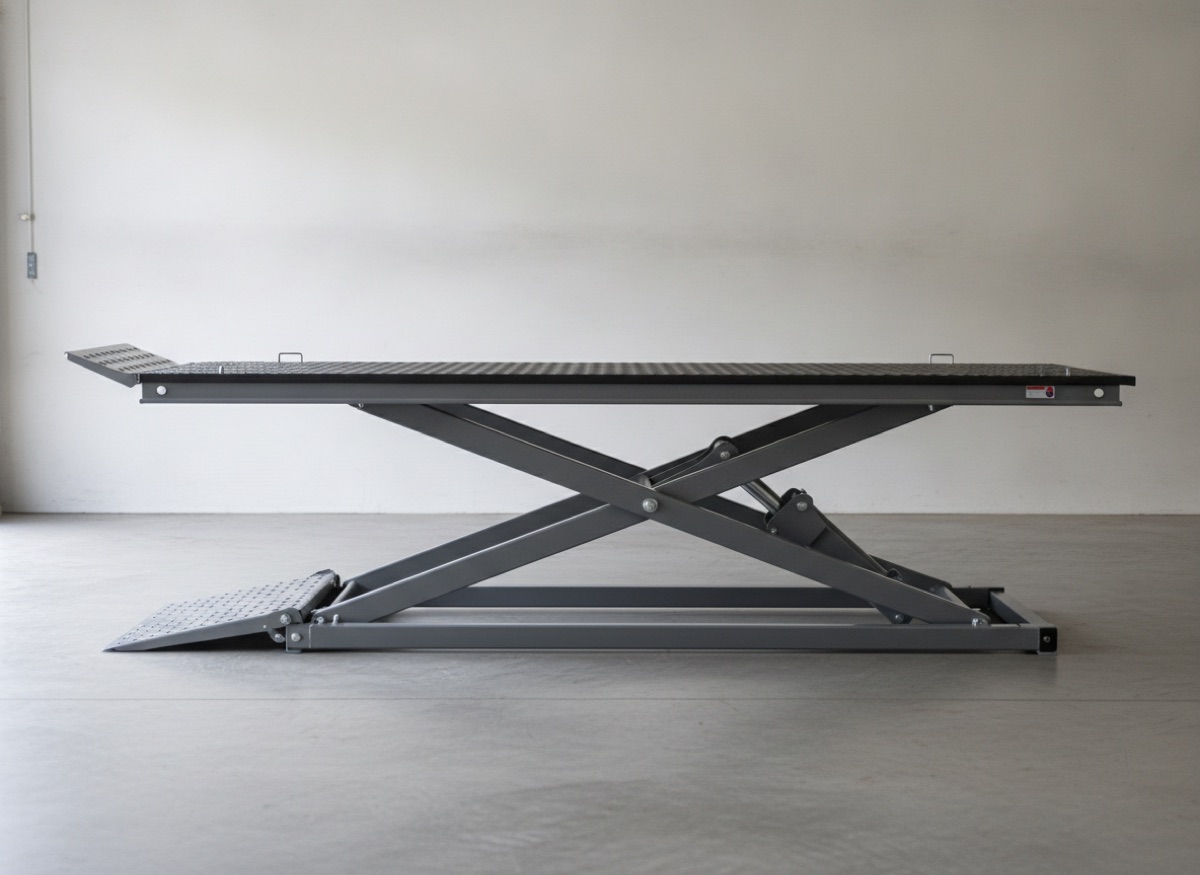
Titan 1500 lb Motorcycle ATV Lift Table Review: Versatile Heavy-Duty Option
Est. $299 MSRP
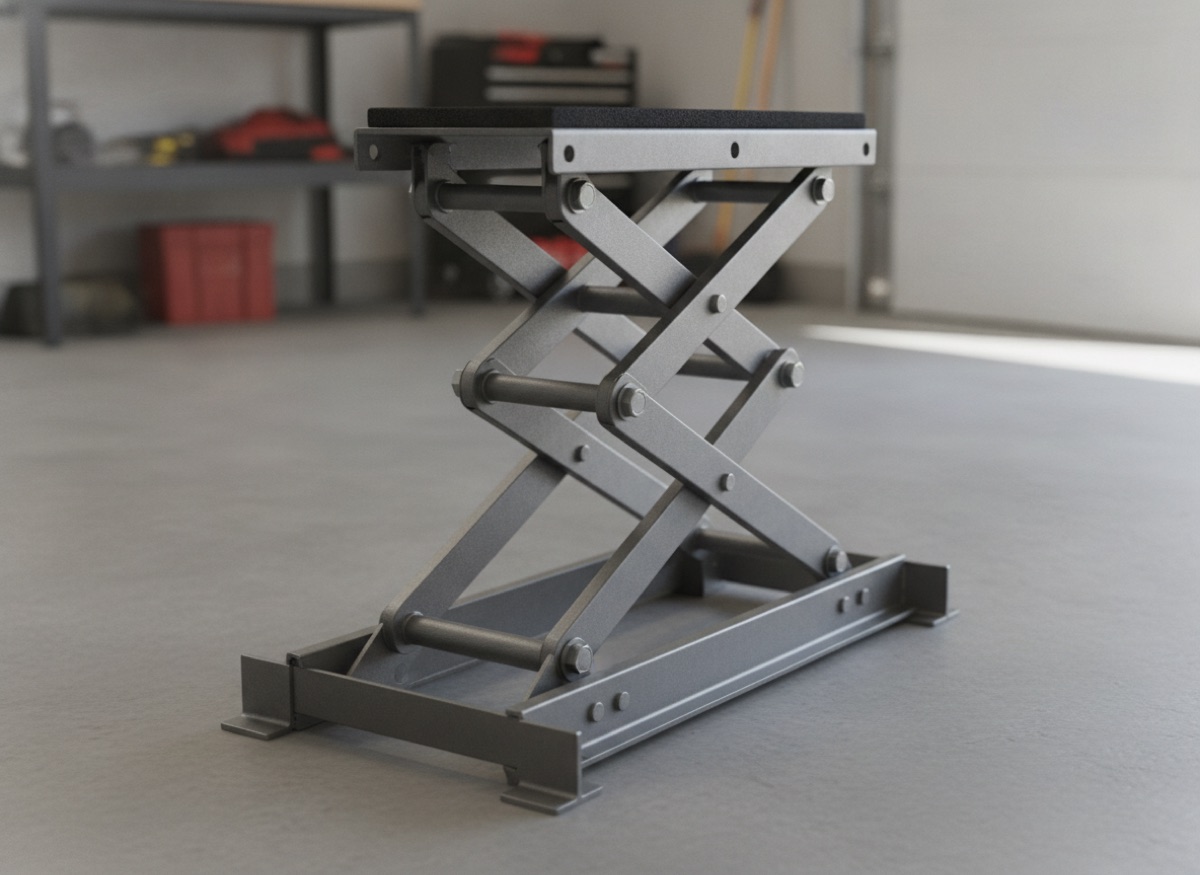
Black Widow Steel Motorcycle Jack 1000 lbs Review: Compact and Affordable
Est. $169 MSRP
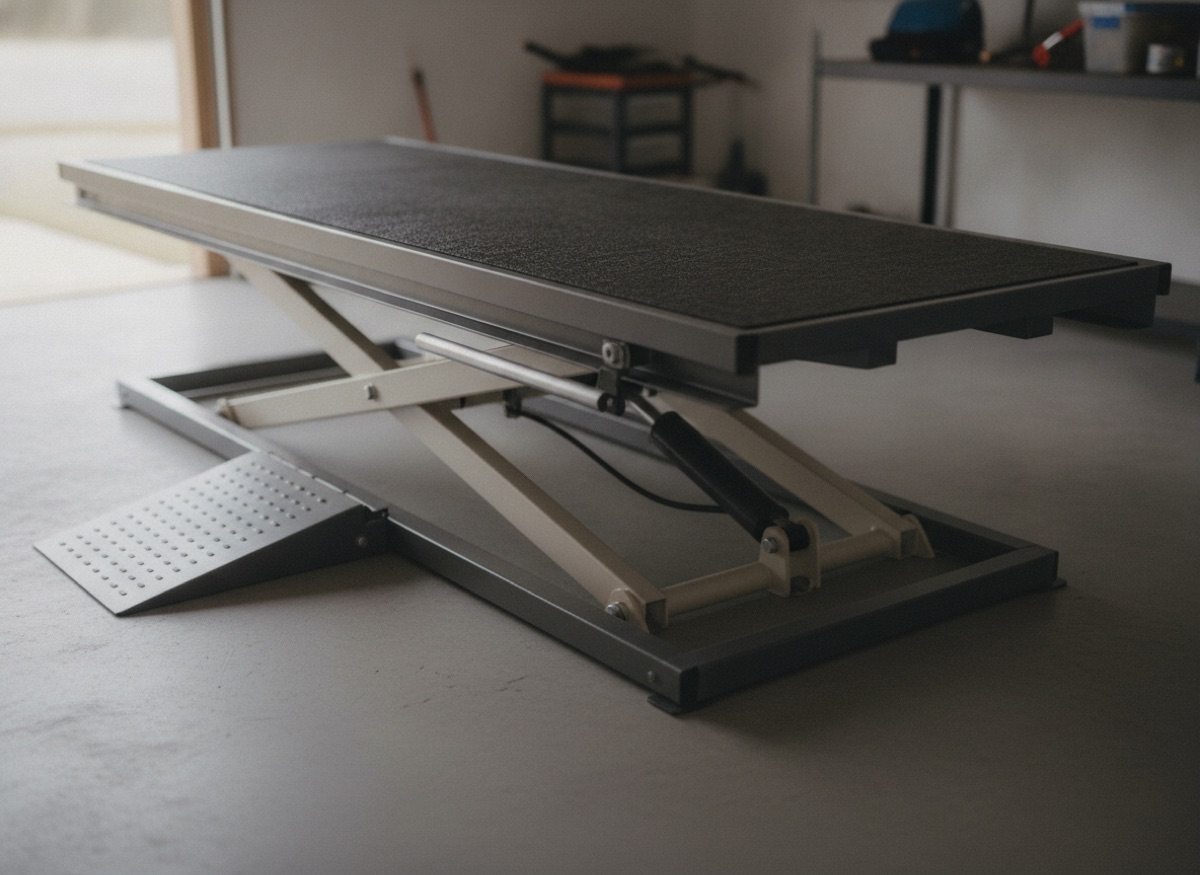
JEGS 80081 Motorcycle & ATV Lift 1500 lbs Review: Performance Brand Value
Est. $349 MSRP
Need Help Choosing?
Use our comparison tool to see how the VEVOR Motorcycle Lift 1100 LBS Hydraulic Table stacks up against other lifts, or read our buying guide for expert recommendations.